What is Engage-PD?
Engage-PD is a physical activity coaching program offered at Teachers College, Columbia University and supported by a community grant from the Parkinson’s Disease Foundation. The Engage-PD coaching program provides the opportunity for individuals diagnosed with Parkinson’s Disease (PD) to have access to expert advice and guidance on engaging in physical activity and exercise programs through the Columbia University Parkinson’s Disease Center of Excellence.
Study Description
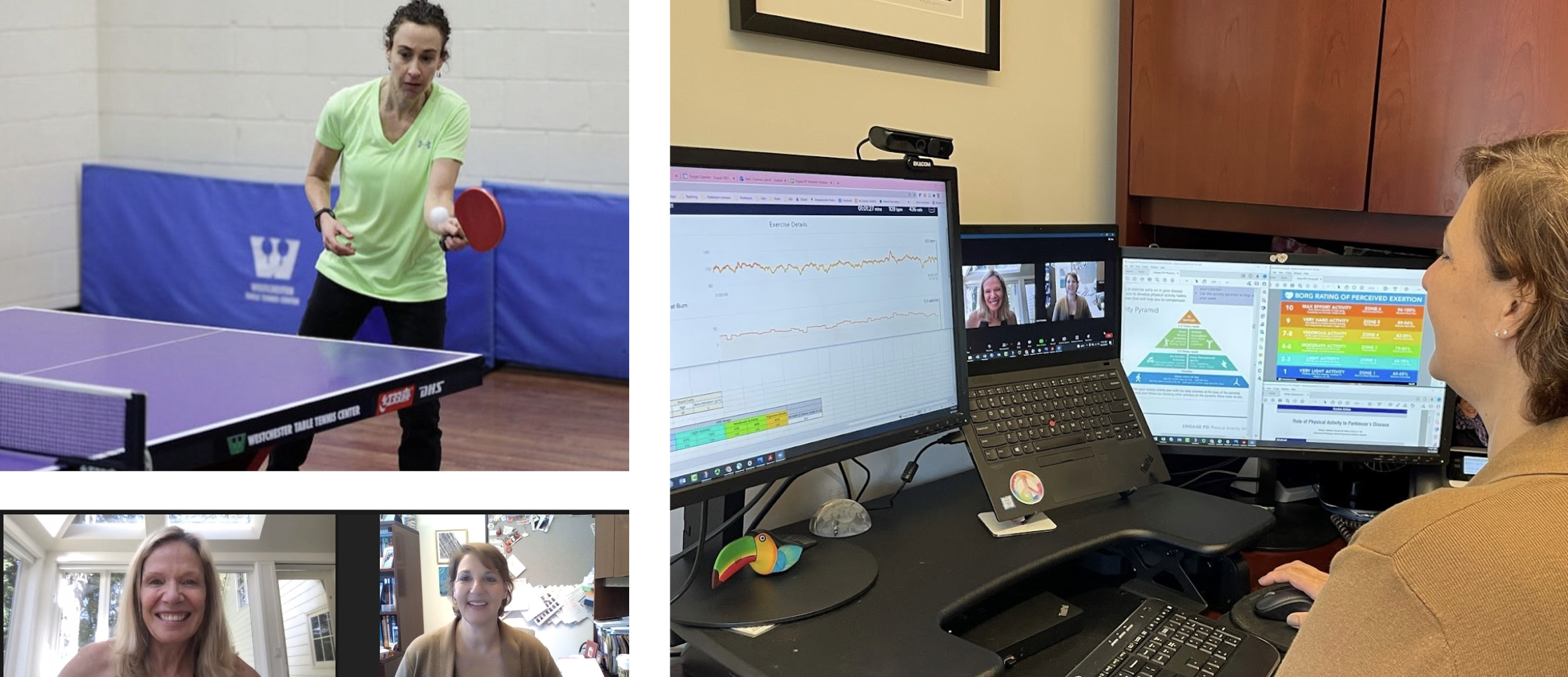
Engage-PD is a single cohort implementation study of a coaching intervention grounded in self-determination theory being conducted at Columbia University Parkinson’s Foundation Center of Excellence in New York City, NY (USA), the early epicenter of the COVID-19 pandemic in the United States. The project was uniquely positioned to be adapted to telehealth delivery and to address an immediate need for support and guidance in the home environment, including people with early-mid-stage PD. Participants completed baseline and follow-up (3 months) assessments and participated in up to 4 coaching sessions, all delivered via a telehealth platform. The intervention incorporated 1:1 coaching, goal-setting, physical activity monitoring, and use of a disease-specific workbook to promote and support safe exercise uptake.
Program Structure
- Initial assessment and coaching session; approximately 60 minutes
- Up to 5 follow-up coaching sessions; approximately 30 minutes each
- 2 follow-up assessments or check-ins
Results
While the program is ongoing, 52 referrals were received and 27 individuals with PD enrolled in the first 2 months of the pandemic for a recruitment rate of 52%. Although direct comparisons with pre-coronavirus recruitment are difficult due to the recency of the Engage-PD implementation study, this recruitment rate was larger than expected, which may have been due to several factors (eg, most patients had limited, if any, access to in-person programs and therapy services during this time, so the Engage program filled an immediate need to provide exercise and activity guidance). There was a wide range of scores for both baseline physical activity and self-efficacy measures.
Conclusion
Remotely delivered interventions may serve as a sustainable platform for physical activity coaching programs for people with PD as well as other neurodegenerative diseases.
Impact
With the uncertainty brought about by the current pandemic, this case report highlights the opportunity to shift the current model of care for individuals with neurodegenerative diseases such as PD.